Efficient, economical, and rapid filtration of large-scale fluids is a key step in the production process in industries such as healthcare, food and beverage, biopharmaceuticals, and microelectronics. The foldable high flow filter element is an advanced filtration technology born to meet this demand. Compared with traditional filters, it has become a choice for high flow applications due to its unique design and superior performance.
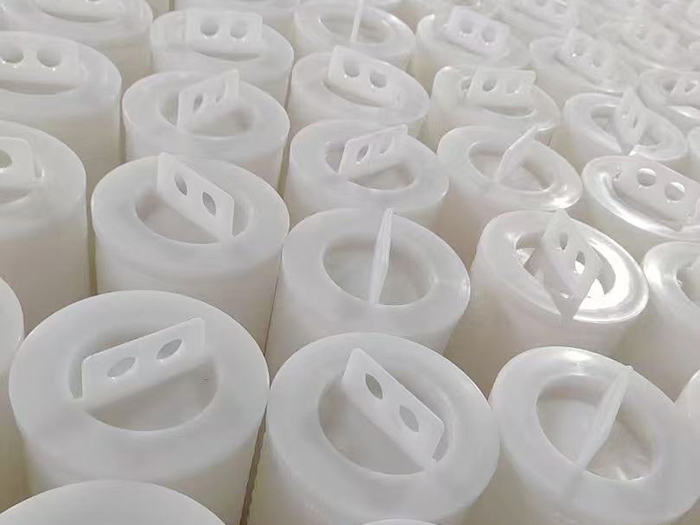
The following are the core advantages of folding high flow filter cartridges:
1. Large filtration area, achieving extremely high flux
This is its core advantage. The filter membrane is precisely folded into a fan-shaped or wavy shape and loaded into a larger diameter filter shell. This design can greatly increase the filtration area within the limited space of the filter housing (usually 3 to 5 times or even higher than ordinary filters of the same class). A larger filtering area means:
Extremely high flow rate: A single filter element can handle a huge liquid flow rate, meeting the needs of large-scale production.
System simplification: When meeting the same flow requirements, fewer filter elements are required, simplifying pipeline and filter housing design, reducing system complexity and initial investment.
2. Longer service life and lower replacement frequency
Due to the large filtration area, the dust holding capacity (pollutant holding capacity) has also significantly increased. Pollutants can be more evenly distributed in the broad folds of the filter membrane, avoiding rapid local blockage.
Extended replacement cycle: Under the same working conditions, its service life far exceeds that of ordinary filter cartridges, reducing the frequency of shutdown and replacement.
Reduce total cost of ownership: Although the price of a single filter element is higher, its longer lifespan and less usage, combined with reduced manual replacement costs and downtime, give it an advantage in overall operating cycle.
3. Excellent filtering accuracy and stability
Folding high flow filter cartridges are usually made of high-quality filter membranes such as polypropylene (PP), polyether sulfone (PES), nylon, or polytetrafluoroethylene (PTFE), manufactured through strict processes.
High precision interception: It can provide precise filtration from 0.1 microns to tens of microns, ensuring stable and reliable filtration effect.
Low pressure differential start-up and operation: The large effective area results in a very low initial pressure differential. As pollutants accumulate, the pressure differential rises slowly, resulting in lower system energy consumption and smoother operation.
4. Excellent structural strength and compatibility
Durable structure: typically equipped with a central column and inner/outer support layers, capable of withstanding high pressure differentials and pressure impacts, preventing the filter element from collapsing during operation or sterilization.
Wide chemical compatibility: Depending on the type of filter membrane and skeleton material, models suitable for various strong acids, strong bases, organic solvents, or high-temperature fluids can be selected.
Multiple sterilization methods: Can tolerate online steam sterilization (SIP), hot water disinfection, or chemical disinfection to meet the requirements of aseptic processes.
5. Significant economic and environmental benefits
Reduce waste: Processing the same volume of fluid produces fewer waste filters, reducing the cost of solid waste disposal and environmental burden.
Energy saving: Maintaining a low operating pressure difference for a long time reduces the energy consumption of the pump.
Improving production efficiency: Longer replacement cycles directly reduce unplanned downtime, ensuring production continuity and efficiency.
Typical application scenarios
Pharmaceutical industry: terminal filtration of process water (purified water, injection water), sterilization filtration of buffer solutions and culture media.
Food and beverage: clarification and sterilization of alcoholic beverages, fruit juices, and drinking water.
Microelectronics: Terminal fine filtration in ultrapure water preparation.
Chemical industry: filtration of high-purity chemical reagents, purification of process gases.
General Industry: Security filtering of pre-processing systems to protect downstream precision equipment.
In summary, the folding high flow filter element perfectly balances the key elements of flow, lifespan, accuracy, and cost through the clever design of "exchanging space for area". It is not only an upgrade of simple filtering elements, but also a systematic optimization solution for large-scale, high-efficiency, and continuous modern production processes. When selecting, it is necessary to choose the appropriate filter material and model based on the specific fluid properties, process requirements (such as accuracy, temperature, pH value), and system pressure parameters, in order to fully leverage its huge advantages.


