
 English
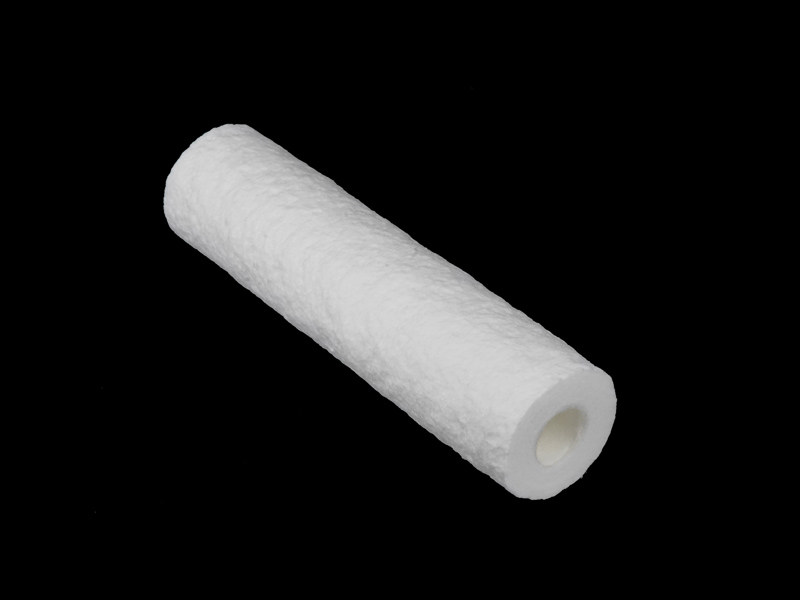
On the defense line of the water purification system, there is always an unknown but crucial role - the meltblown filter element. It usually appears in the form of white columns, with a seemingly simple structure, but its function is an indispensable cornerstone of the entire water purification process. Simply put, the melt blown filter element is the "front screen" and "loyal guard" of the water purification system, mainly responsible for physical screening and filtering, protecting the more precise and expensive filter elements at the back end.
1、 Core role: Precise physical interception, guarding the system gate
The core function of the melt blown filter element is to precisely physically intercept tap water through its intricate fiber network. This is mainly reflected in two aspects:
Intercept suspended particulate matter targets: visible or small insoluble impurities such as rust, sediment, red worms, colloids, algae, etc.
Process: When water flows through the filter element, these particles larger than the pore size of the filter element will be directly intercepted on the fiber surface or in the internal channels. Ensuring the precision filter element in the backend is its key strategic value. If the above impurities are allowed to enter the system directly, they will quickly clog, contaminate, or even damage the activated carbon filter or reverse osmosis (RO) membrane at the back end.
Function: The melt blown filter element sacrifices itself and bears the initial and significant wave of pollution impact, thereby significantly extending the service life of the back-end core filter element and reducing the overall maintenance cost of the system.
2、 Performance characteristics: How to achieve efficient protection?
The reason why melt blown filter cartridges are capable of fulfilling this responsibility is due to their unique structure and performance:
Gradient deep filtration: Unlike surface filtration, high-quality melt blown filter cartridges gradually increase in fiber density from the outside to the inside, and the pore size also decreases accordingly. This structure allows particles of different sizes to be layered and evenly distributed throughout the entire depth of the filter element, thereby maximizing its pollutant holding capacity, delaying clogging, and prolonging its lifespan.
High pollutant holding capacity: Due to its three-dimensional network structure and deep filtration mechanism, it can "hold" a large amount of impurities until saturation before replacement, making it cost-effective.
Good chemical stability: The main material is polypropylene (PP), which is a food grade material that is non-toxic, odorless, acid and alkali resistant, and will not corrode itself or release harmful substances into water, ensuring the safety of filtration.
3、 Application scenario: ubiquitous grassroots protection
The application of melt blown filter cartridges is extremely extensive and is a fundamental component in the field of water purification
Household water purifier: The primary filtration of the vast majority of reverse osmosis (RO) water purifiers and ultrafiltration water purifiers is responsible for pre-treatment tasks.
Whole house pre filtration: As the main inlet filtration after the household water meter, it provides basic protection for all water appliances (water heaters, washing machines, water pipes, etc.) in the whole house.
Industrial pre filtration: provides initial purification for process water in industries such as food and beverage, chemical, and electronics.
Summary: An indispensable cornerstone
In summary, the melt blown filter may not have the wonderful use of post activated carbon to improve taste, nor the magical ability of RO membrane to produce pure water, but its role is simple and crucial - it is the loyal guardian of the water purification system and a strong shield to protect the subsequent precision filter. Its existence ensures that the entire water purification system can operate stably, efficiently, and for a long time. Therefore, regularly replacing the melt blown filter element is an important step in ensuring the safety of household drinking water and the health and economy of water purification equipment.


